The landscape of digital nomad taxes has shifted dramatically in 2026. What worked two years ago might now expose you to unexpected tax liabilities, double taxation, or even geopolitical risks. With new digital nomad visas launching across Europe and Asia, and traditional tax havens facing new challenges, understanding your global tax obligations has never been more critical.
For digital nomads, "tax-free" sounds simple. In practice, it never is. A country can have no personal income tax and still be a poor base if the visa path is weak, the cost of living is punishing, or the regional security picture has changed. In 2026, the smartest way to evaluate tax-friendly destinations is to look at three things together: tax treatment, legal remote-work access, and current stability.
This comprehensive guide unpacks how tax residency is determined in 2026, how key tax structures apply, and how digital nomad visas impact your liability. You will also learn practical strategies for minimizing your tax burden legally while maintaining compliance under international reporting standards.
Understanding Digital Nomad Tax Residency
Your tax liability as a remote worker depends primarily on your tax residency, not your nationality or travel plans. Most countries use a residence-based system, taxing anyone who establishes sufficient ties to their territory.
The 183-Day Rule
The most common determinant of tax residency worldwide is the 183-day rule. If you spend more than half the year (183 days) in a single country during a 12-month period, you will likely be considered a tax resident there.
However, countries interpret this differently. Some count calendar years, while others use rolling 12-month windows. Even shorter stays can create tax liability if you establish a permanent home or economic ties.
Beyond Days: Center of Vital Interests
Counting days is only the first step. Tax authorities increasingly look at your "center of vital interests" to determine residency. This includes:
- Economic ties: Where your business is registered, where your clients are located, and where your bank accounts are held.
- Social ties: Where your family lives, where you own property, and where you hold memberships in clubs or organizations.
- Permanent home: Having a permanent place of abode available to you, even if you do not spend 183 days there.
If you trigger tax residency in multiple countries, tax treaties use these tie-breaker rules to determine which country has the primary right to tax your income.
Pro Tip: Proper tracking is essential to avoid accidentally becoming a tax resident where you do not intend to be. Learn more about the 5 best methods to track your tax residency →
Worldwide vs. Territorial Tax Systems
Understanding how different countries tax their residents is crucial for structuring your digital nomad lifestyle efficiently.
Worldwide Taxation
Countries with worldwide taxation systems tax their residents on all global income, regardless of where it was earned or where the work was performed. The United States, the United Kingdom, Canada, and Australia all use this system. If you are a tax resident in one of these countries, moving your business offshore will not automatically shield your income from taxation.
Territorial Taxation
Territorial tax systems only tax income that is sourced within the country's borders. Foreign-sourced income—money earned from clients or employers outside the country—is generally exempt from local taxation. Costa Rica, Panama, and Singapore operate on territorial systems, making them highly attractive bases for digital nomads with international clients.
Remittance-Based Taxation
Some countries, like Thailand, historically used a remittance-based system where foreign income was only taxed if it was brought into the country during the same tax year it was earned. However, these rules are evolving rapidly, and relying on remittance loopholes in 2026 requires careful professional guidance.
U.S. Digital Nomad Tax Rules for 2026
The United States is unique among developed nations because it uses a citizenship-based taxation system. U.S. citizens and Green Card holders must report their worldwide income annually via Form 1040, regardless of where they live or how long they have been abroad.
Foreign Earned Income Exclusion (FEIE)
The Foreign Earned Income Exclusion (FEIE) is the most powerful tool for U.S. digital nomads. For the 2026 tax year, you can exclude up to $132,900 of qualifying foreign earned income from U.S. federal income tax.
To qualify, you must meet either:
- The Physical Presence Test: Being physically present in a foreign country or countries for at least 330 full days during any period of 12 consecutive months.
- The Bona Fide Residence Test: Establishing bona fide residence in a foreign country for an uninterrupted period that includes an entire tax year.
Foreign Tax Credit (FTC)
If you pay income taxes to a foreign country, you can often use the Foreign Tax Credit (Form 1116) to offset your U.S. tax liability dollar-for-dollar. Many nomads use a strategic mix of the FEIE and FTC to eliminate double taxation effectively.
Self-Employment Tax
A common trap for U.S. digital nomads is the self-employment tax. Even if your income is fully excluded from federal income tax under the FEIE, you are still liable for the 15.3% self-employment tax (Social Security and Medicare) on your net earnings.
The only way to avoid this is if you live in a country with a Totalization Agreement with the U.S. and pay into their local social security system instead.
The Best Tax-Friendly Countries for Digital Nomads in 2026
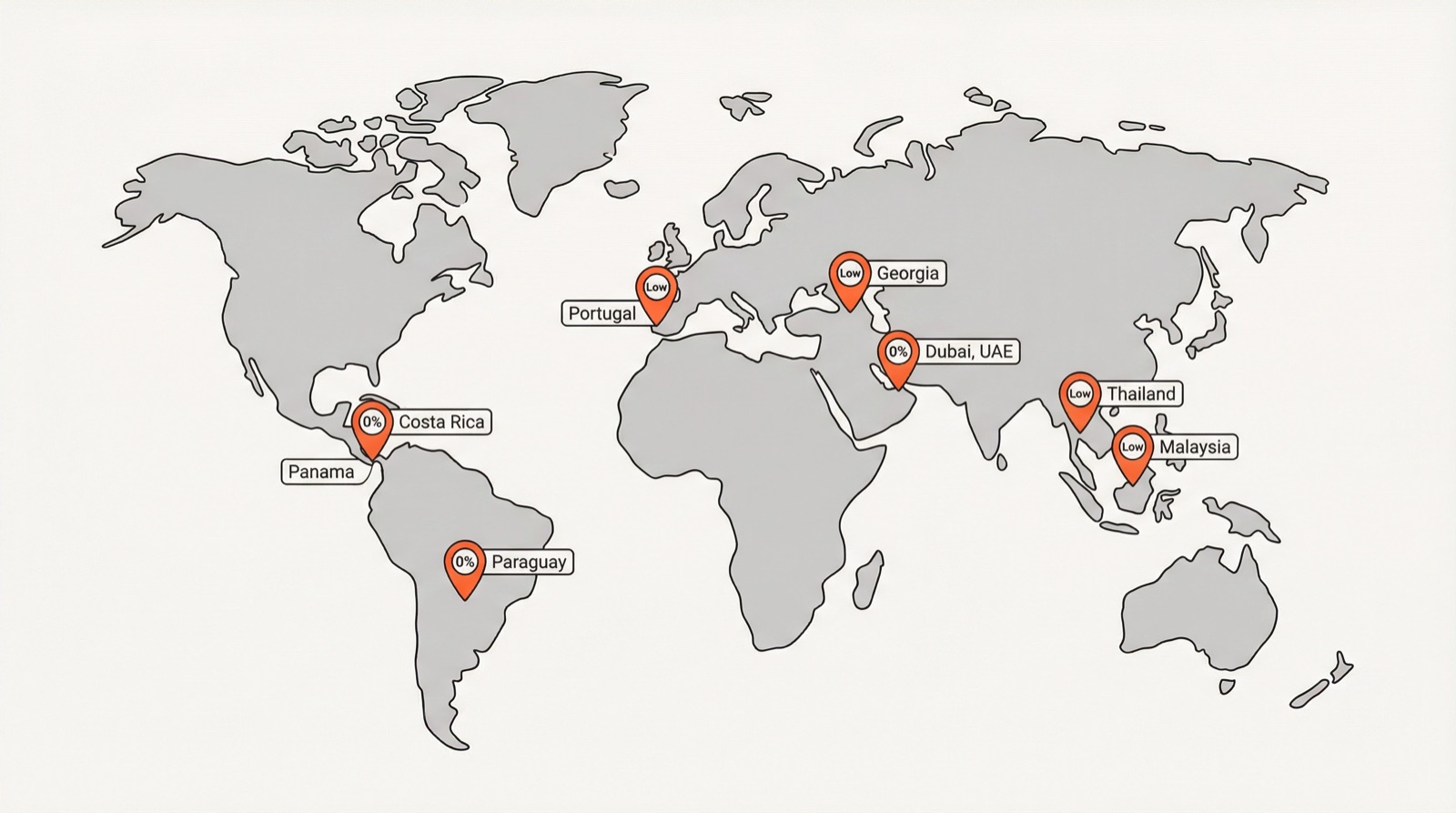
The map of tax-friendly destinations has shifted significantly in 2026. Several well-known low-tax jurisdictions in the Gulf and Eastern Mediterranean now carry elevated travel warnings, while safer visa-led alternatives have become more attractive.
1. Costa Rica: The Best Overall Balance
Costa Rica is one of the strongest all-around picks for digital nomads in 2026. It solves the practical problem most remote workers actually have: how to live abroad legally, comfortably, and tax-efficiently without stepping into a fragile geopolitical environment.
Costa Rica's official digital nomad program allows remote workers to extend a 90-day tourist stay to one year, with the option to renew. Crucially, the official tourism authority states that digital nomads under the program are explicitly exempt from income tax on their foreign-sourced income.
2. Croatia: The Clear European Framework
Croatia has become one of the best European options because it pairs an attractive lifestyle with a clear legal remote-work framework. Temporary stay for digital nomads can be granted for up to 18 months for third-country nationals who work for a foreign employer or their own company not registered in Croatia.
During this period, digital nomads are generally exempt from Croatian income tax on their remote earnings, making it a highly efficient European base.
Planning a European base? Make sure you understand how your stays affect your visa limits. Read our complete guide to the Schengen 90/180 Rule →
3. Portugal: The NHR 2.0 Era
Portugal's famous Non-Habitual Resident (NHR) program closed to new applicants at the end of 2023, but 2026 brings the new NHR 2.0 (IFICI) regime.
While more restrictive than its predecessor, it still offers a flat 20% tax rate on qualifying Portuguese-source employment or self-employment income, and exemptions on most foreign-source income. Combined with the D8 Digital Nomad Visa, Portugal remains a strong, albeit more complex, option.
4. Bulgaria: The 10% Flat Tax Champion
For those seeking permanent tax residency in Europe, Bulgaria remains the undisputed champion for tax efficiency. With a flat 10% personal and corporate income tax rate, it is the lowest in the European Union.
In January 2026, Bulgaria officially launched its new digital nomad visa, making it easier than ever for remote workers to establish a base there. If you spend more than 183 days in Bulgaria, you become a tax resident and owe the 10% flat tax on your worldwide income.
5. United Arab Emirates: High Reward, Higher Risk
The UAE (specifically Dubai) is still one of the strongest true zero-income-tax options on paper. The virtual work residence visa allows you to live tax-free with excellent infrastructure.
However, in 2026, it must be framed as a high-upside, higher-risk choice. Recent geopolitical tensions have led to elevated travel advisories for the region. For high earners comfortable weighing these risks, the 0% tax rate remains highly attractive.
Comparing Top Digital Nomad Tax Bases (2026)
| Country | Income Tax Rate (Nomads) | Visa Duration | Key Advantage |
|---|---|---|---|
| Costa Rica | 0% (Foreign income) | 1 year (renewable) | High stability, clear tax exemption |
| Croatia | 0% (During visa) | Up to 18 months | Best European lifestyle balance |
| Bulgaria | 10% Flat Rate | 1 year (renewable) | Lowest permanent tax rate in EU |
| Portugal | 20% (NHR 2.0 qualifying) | 1-2 years | Strong expat community, EU access |
| UAE (Dubai) | 0% | 1 year (renewable) | Zero tax, premium infrastructure |
5 Common Tax Mistakes Digital Nomads Make
Navigating international tax law is complex, and mistakes can be costly. Here are the most common pitfalls to avoid in 2026:
1. Assuming "Living Abroad" Means "No Taxes"
Moving to a tax-free country does not automatically sever your tax obligations to your home country. You must actively establish tax residency elsewhere and, in many cases, formally break ties with your previous jurisdiction.
2. Confusing a Visa with Tax Exemption
A digital nomad visa grants you immigration status—the right to be in the country. It does not automatically exempt you from taxes. While some countries (like Costa Rica) explicitly include tax exemptions in their nomad visas, many others will tax you if you trigger their residency rules.
3. Failing to Track Travel Days Accurately
Relying on memory or passport stamps is a dangerous strategy. Tax authorities require precise documentation of your physical presence. A miscalculation of just one day can trigger full tax residency and liability on your worldwide income.
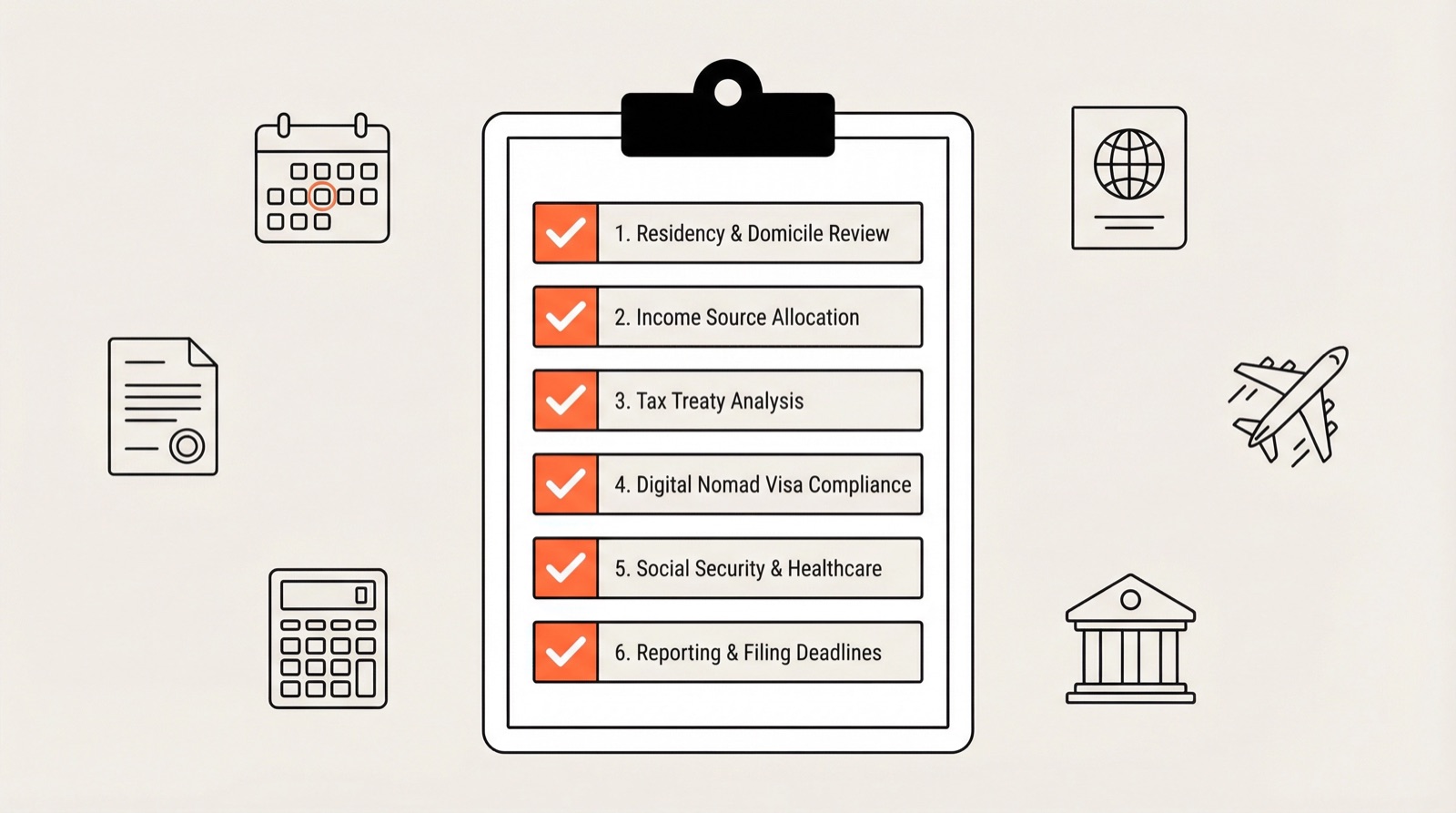
4. Ignoring State Taxes (For Americans)
Many U.S. expats successfully exclude their federal income using the FEIE but forget about state taxes. "Sticky" states like California, New York, and Virginia make it notoriously difficult to break residency. You must take concrete steps to sever ties, such as closing bank accounts, giving up driver's licenses, and establishing domicile elsewhere.
5. Overlooking Social Security Contributions
Even if your income is exempt from income tax, you may still be liable for social security or self-employment taxes in your home country or your host country. Always check for Totalization Agreements between the two nations.
How to Legally Minimize Your Tax Burden
Tax optimization is about structuring your life and business efficiently within the bounds of the law. Here is how smart digital nomads approach it in 2026:
- Choose a Territorial Tax Base: Establish your primary tax residency in a country that only taxes local income (e.g., Costa Rica, Panama).
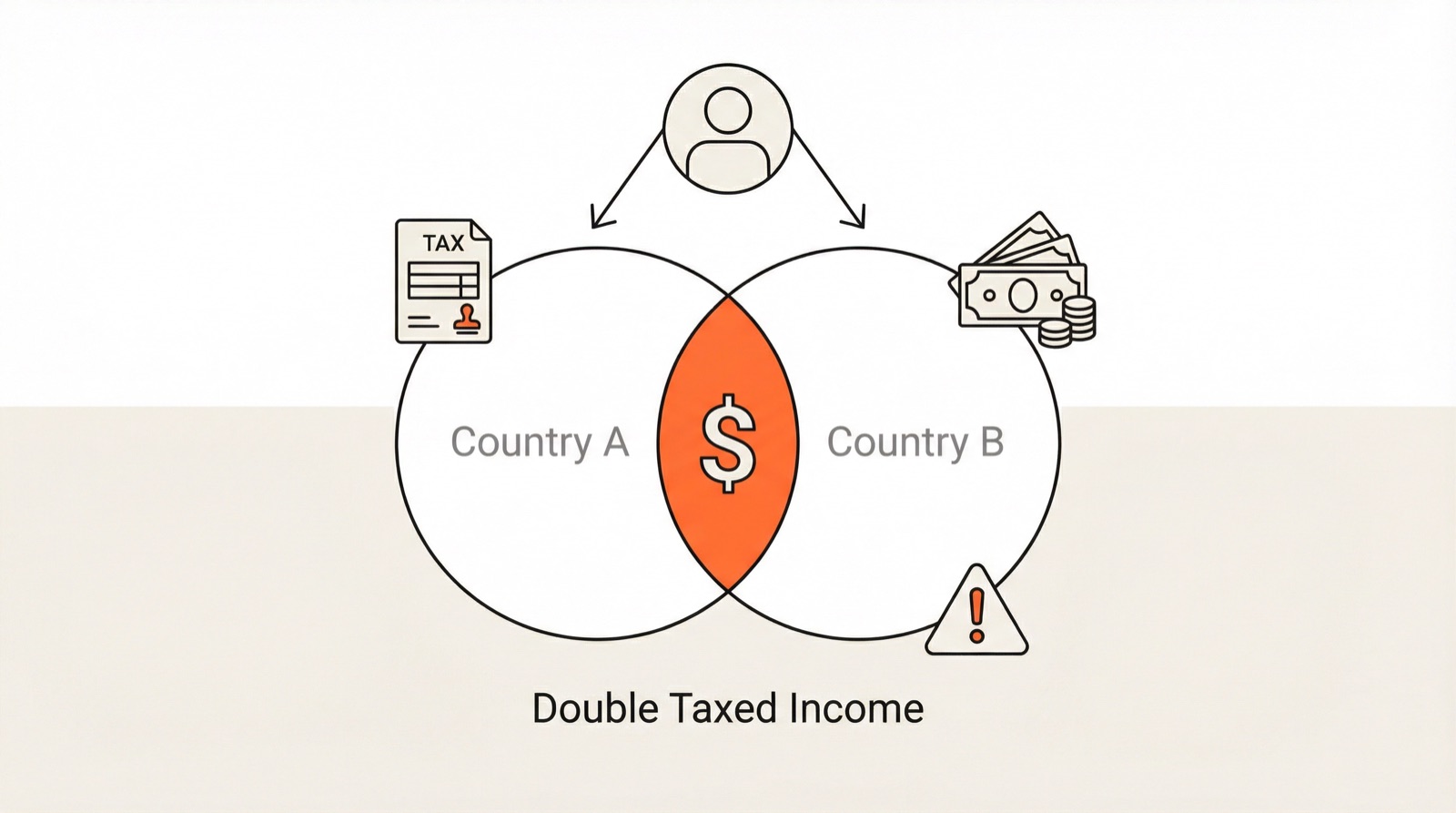
- Leverage Tax Treaties: Use double taxation agreements to ensure you are not taxed twice on the same income.
- Incorporate Strategically: Separate your personal tax residency from your corporate tax residency. For example, living in a territorial tax country while operating a US LLC or an Estonian OÜ.
- Track Your Days Meticulously: Use a dedicated tool to ensure you meet the physical presence requirements for exemptions (like the FEIE) and avoid accidentally triggering residency in high-tax jurisdictions.
Frequently Asked Questions
Do digital nomads pay taxes? Yes. In most cases, digital nomads pay taxes. The question is where and how much. This depends on your tax residency, your home country's rules (especially for U.S. citizens), and the source of your income.
How do I avoid double taxation as a digital nomad? You can avoid double taxation by leveraging tax treaties between countries, using mechanisms like the Foreign Tax Credit (FTC), and carefully managing your physical presence to avoid triggering tax residency in multiple jurisdictions simultaneously.
Do I need a company (LLC) to optimize my taxes? Not necessarily, but it often helps. An LLC or similar corporate structure can help separate your personal and business liability, optimize how you pay yourself (salary vs. dividends), and provide access to better banking and payment processing options.
What happens if I don't spend 183 days anywhere? Being a "tax nomad" or "perpetual traveler" without a tax residency is becoming increasingly difficult. Many banks and financial institutions now require proof of tax residency (like a Tax Identification Number) to maintain accounts. Furthermore, your home country may continue to claim you as a tax resident until you can prove you have established residency elsewhere.
Conclusion: Plan Before You Pack
The era of flying under the radar as a digital nomad is over. In 2026, global tax authorities are more connected, and data sharing is the norm.
The best tax strategy is proactive, not reactive. Choose a base that aligns with your lifestyle and business structure, understand the visa and tax implications before you arrive, and meticulously track your physical presence.
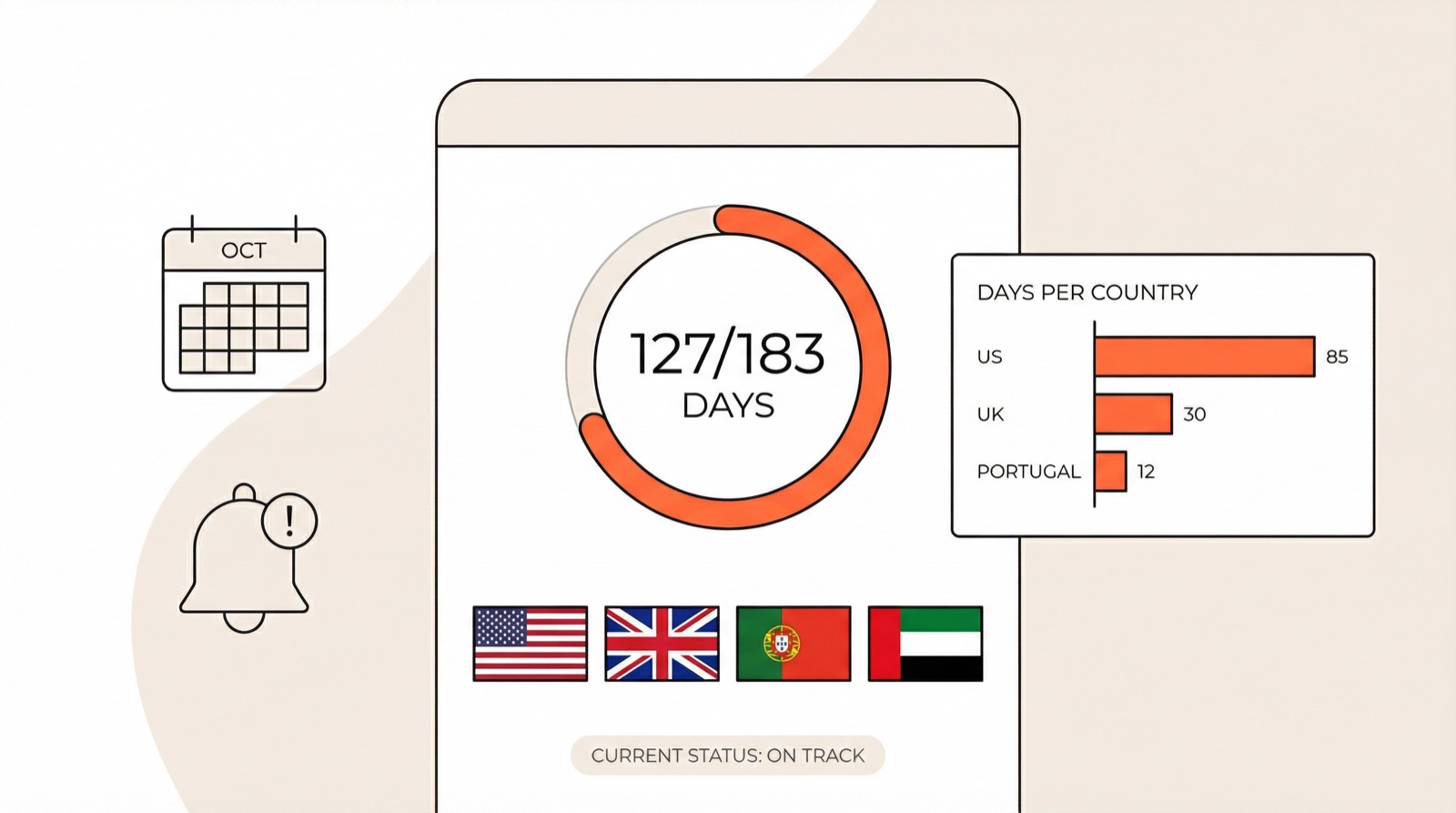
Ready to take control of your tax residency? Stop guessing your day counts. Try Days of Stay for free and track your international travel with precision to ensure you never accidentally trigger unwanted tax liabilities.
Disclaimer: This article is for informational purposes only and does not constitute legal or tax advice. Tax laws are complex and change frequently. Always consult with a qualified international tax professional regarding your specific situation.